


 I’ll admit it… this is one of those things I put off longer than I should have.
Not because it’s difficult—it isn’t—but because it feels unnecessary. Everything important is already on my phone, my computer, or tucked safely away somewhere I can get to it when I need it. At least, that’s what I told myself. Then I stopped and thought about when I might actually need that information.
Not on an ordinary day, when everything is working the way it should. But on the day the power goes out and stays out longer than expected. When the internet isn’t an option. When my phone battery is sitting at 2% and dropping faster than I’d like. Those are the moments when “I’ll just pull it up” stops being a plan and starts being a problem.
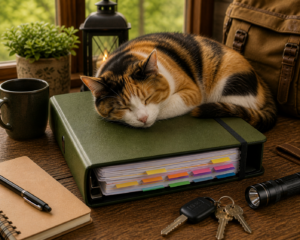
That’s when a simple binder suddenly makes a whole lot of sense. I keep mine in an easy-to-grab spot. Nothing fancy. Just something I can reach for without thinking. Inside are the things I wouldn’t want to be without if I needed to act quickly or couldn’t rely on my usual devices. Important phone numbers—written down, not just saved. Medical information and medications. Insurance details. Copies of IDs and documents I’d rather not try to replace. Information for Mo and Roxie, because they’re part of any plan I make, no question about it. And a few notes I hope I never need, but would be grateful to have if I did.
It didn’t take long to put together, and once it was done, I felt that quiet sense of relief I’ve come to recognize as a good sign. Not because I expect something to go wrong, but because if it does, I won’t be standing there wishing I’d taken the time.
It’s easy to rely on technology—we all do. But being prepared means having a backup for the things you depend on most. And sometimes that backup is as simple as paper, a pen, and a binder you hope you never have to use.
What to Put in Your Emergency Binder
If you’re not sure where to start, this is what I keep in mine:
Important phone numbers (family, doctors, vet, local services)
List of medications and any medical conditions
Insurance information (home, auto, health)
Copies of IDs (driver’s license, passport if you have one)
Bank and financial contact information (not full account numbers—just what you’d need to call)
Emergency contacts written clearly and easy to find
Pet information (vaccinations, vet info, feeding notes for Mo and Roxie)
Copies of important documents (birth certificate, marriage certificate, etc.)
A simple “what to do” note in case someone else needs to step in
You don’t have to do it all at once. Add a few things, close the binder, and come back to it another day. That’s how most good prepping gets done—one step at a time.
Stay prepped & prepared
Pepper